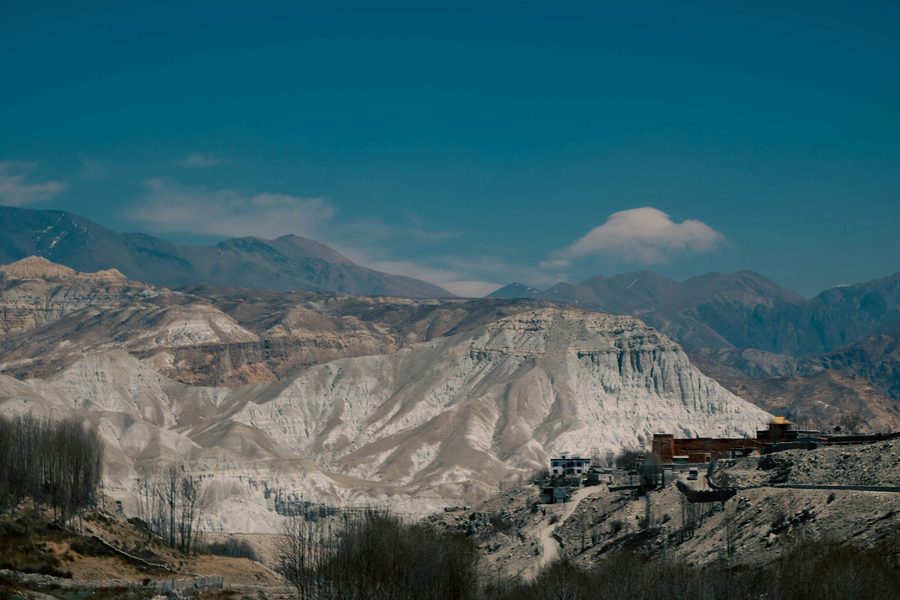
Tibet is the highest plateau on earth, a landscape of vast horizons, Buddhist monasteries and the world's highest railway. The Beautiful Sky Road (Xueyu Tianlu) is built for it: panoramic cars, pressurised comfort and pulse oxygen on board, so the climb to Lhasa is gradual and humane. From Lhasa the route reaches Shigatse, the Everest region and the great lakes, a journey that is as much about altitude and silence as about sightseeing.
Highlights
Lhasa
The capital: the Potala Palace, the Jokhang Temple and the debating monks of Sera, the cultural heart of Tibet.
Shigatse & Everest
The Tashilhunpo monastery and the road south to Everest Base Camp beneath the world's highest peak.
Namtso & Yamdrok
Two of the holiest lakes: the turquoise Yamdrok on the road south, the vast Namtso ringed by snow.
Nyingchi
The 'Switzerland of Tibet' in the southeast, peach blossoms in spring and the lowest, greenest corner of the plateau.
The Qinghai-Tibet railway
The high-altitude line itself, from Golmud onto the roof of the world, with permafrost bridges and glacier views.
Tsetang & the Yarlung valley
The early Tibetan kingdom: the first palaces and monasteries, quieter than the Lhasa circuit.
The trains that reach Tibet
Tibet is served by the Beautiful Sky Road (Xueyu Tianlu), a new 2026 plateau train with panoramic sightseeing cars and onboard pulse oxygen. It is designed for the altitude rather than against it, with a gradual ascent and medical support, the most comfort-minded way to ride the world's highest railway.
Beautiful Sky Road
The plateau train: panoramic cars, pulse oxygen and a gradual, supported climb to Lhasa.
Best time to go
May to October is the open season: dry, with the warmest days and the clearest views of Everest. Winter (November-April) is brutally cold and some passes close, though Lhasa can be crisp and crowd-free. Spring (April-May) brings Nyingchi's peach blossom.
Practical notes
- Foreign travellers need a Tibet Travel Permit, arranged by a licensed agency with an official invite letter; you cannot travel independently in Tibet.
- The train uses pulse oxygen and a gradual ascent, but still acclimatise in Lhasa for a day or two before higher stops.
- Pack for extreme sun and cold at altitude even in summer; layers, sunglasses and lip balm are essential.
- It is a new 2026 product; register interest to receive pricing and departure dates as they are released.