Aboard the New Orient Express, China's longest-running luxury tourist train since 1999. The complete Xinjiang: from fir forests and glacial lakes of the north to desert oases and Silk Road cities of the south.
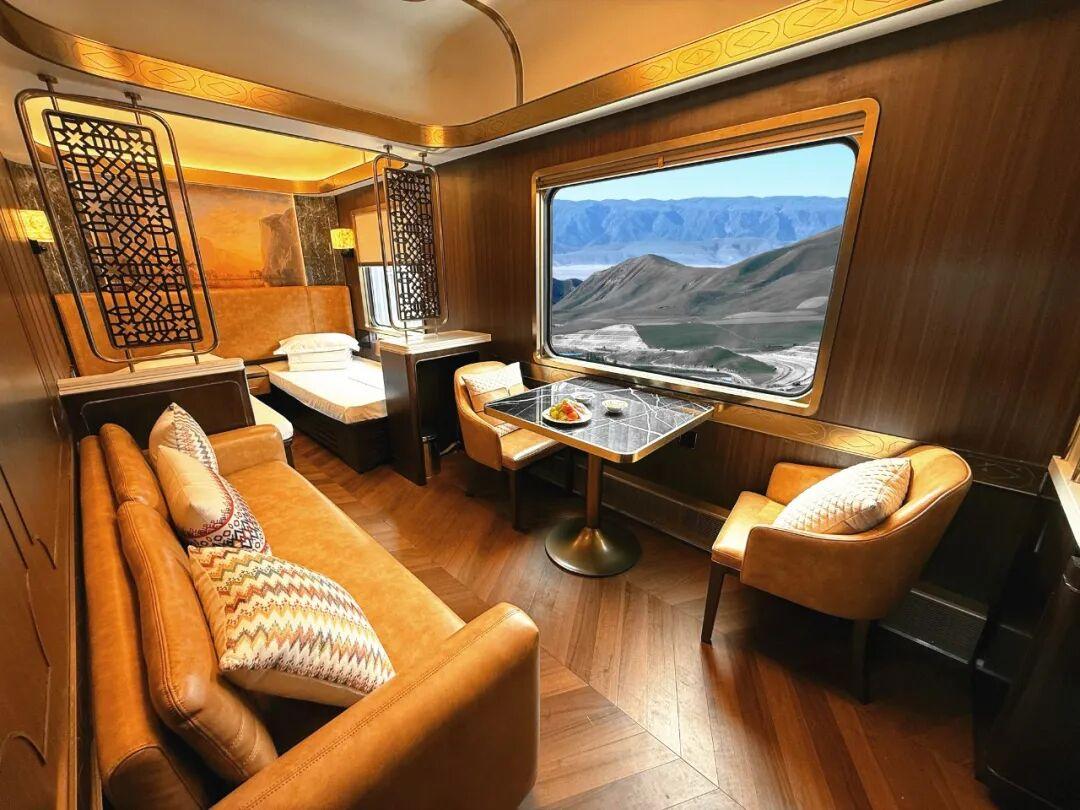
The definitive Xinjiang journey, operated by China Railway Urumqi Group. Two directions: A-line (Urumqi to Kashgar) and B-line (Kashgar to Urumqi). 14 stops across the province, combining the natural drama of the north with the cultural depth of the south. Gold-tier suites, Xinjiang cuisine, and 35 seasonal departures each operating season.
Two halves of Xinjiang. North of the range is landscape: Kanas, Hemu and the northern grasslands. South is the Silk Road: Kuqa, the ancient kingdom of Kucha, and Kashgar. A programme that covers both is the one worth the days. One note for overseas travellers: the Bayanbulak section of the Duku Highway is not open to foreign passports (Hong Kong, Macao and Taiwan documents travel the full route), so those sectors run on a substitute routing for foreign-passport guests. See the Xinjiang destination guide.
Itinerary
01
Day 1
Urumqi, Assembly
Arrive in Urumqi, the world's most inland city. Afternoon visit to the Xinjiang Regional Museum for Silk Road artefacts and the 4,000-year-old Tarim mummies. Evening welcome banquet featuring Uyghur and Han cuisines. Overnight in a 5-star hotel.
02
Day 2
Urumqi to Altay
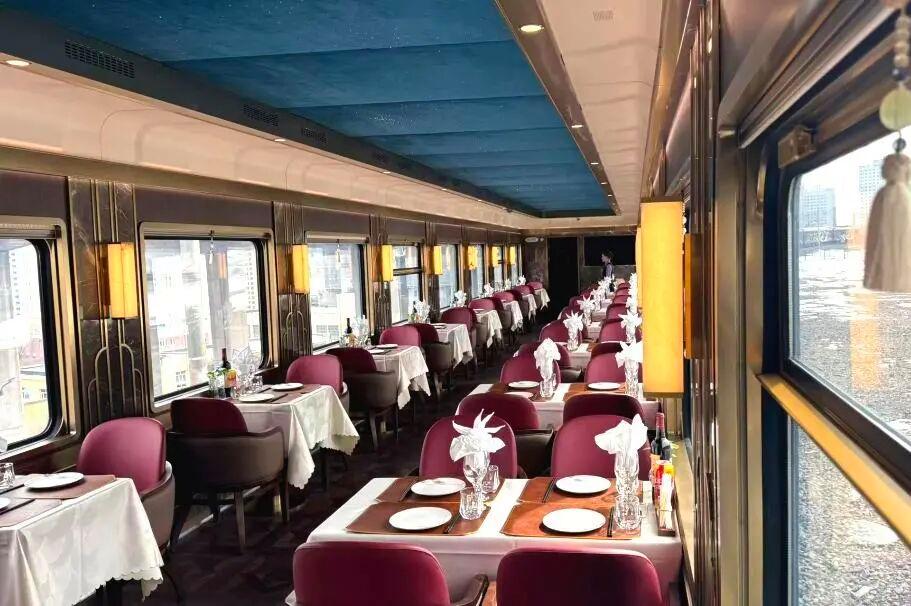
Board the New Orient Express. Settle into your suite as the train departs north through the Junggar Basin. Afternoon tea in the observation car with views of the Gurbantunggut Desert. First dinner onboard, the galley introduces its Xinjiang repertoire.
03
Day 3
Kanas Lake
Disembark at the Tianshan foothills. Transfer by coach to Kanas Lake, a glacial lake whose colour shifts from turquoise to deep blue. Walk the lakeshore trail. Visit a Tuvan village. The 'Switzerland of Xinjiang' earns its name. Return to train for overnight departure.
04
Day 4
Hemu Village
Arrive at Hemu, a cluster of wooden cabins in a highland valley. Morning light on the birch forests is a photographer's dream. Afternoon: grassland walk or horseback ride with Kazakh herders. Evening onboard with a regional wine tasting.
05
Day 5
Sayram Lake
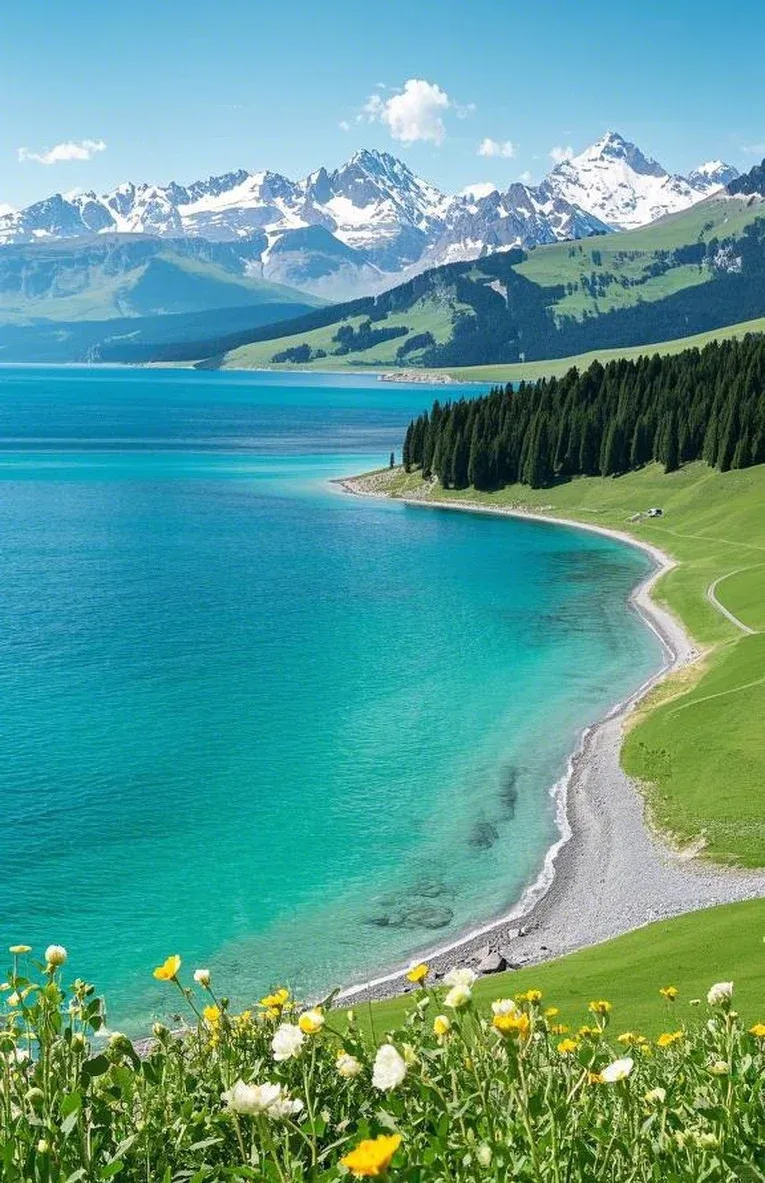
The largest alpine lake in the Tianshan, ringed by snow-capped peaks and summer wildflower meadows. A full day here: lakeside walks, a Kazakh yurt lunch, and the chance to see the lake's legendary 'tears of the mountain', the shifting colours at sunset.
06
Day 6
Yining & Nalati Grasslands
Morning in Yining's old town, a crossroads of Kazakh, Uyghur and Russian cultures. Afternoon at the Nalati Grasslands, rolling alpine meadows at 2,000 metres, dotted with grazing horses. Traditional Kazakh dinner inside a yurt. Return to train.
07
Day 7
Bayanbulak & the Nine-Turn River
The vast Bayanbulak wetland, home to wild swans and the meandering Kaidu River. The 'Nine Bends, Eighteen Turns' viewpoint is one of Xinjiang's most-photographed panoramas. Afternoon return to train for the journey south.
08
Day 8
Duku Highway & Kuqa
A highlight day. The Duku Highway crosses the Tianshan through some of the most dramatic mountain scenery in China. Descend into Kuqa, an ancient Silk Road kingdom. Visit the Kizil Thousand-Buddha Caves, some of China's oldest Buddhist art.
The Duku Highway is open to mainland, Hong Kong, Macao and Taiwan travel documents. The Bayanbulak section alone is not open to holders of foreign passports; where an itinerary includes that section, foreign-passport guests travel a substitute routing arranged by the operator. Overseas guests travel a substitute routing arranged by the operator. Full guide.
09
Day 9
Kuqa Grand Mosque & Bazaar
Morning at the Kuqa Grand Mosque, a blend of Islamic and Chinese architecture. The old-town bazaar is a sensory immersion in Uyghur culture. Afternoon onboard crossing the Taklamakan Desert fringe. Evening lecture by the onboard Silk Road historian.
10
Day 10
Arrive Kashgar
Morning arrival in Kashgar. The Sunday Grand Bazaar has operated for over 2,000 years. The Id Kah Mosque. The mud-brick alleys of the old city. Standing at the crossroads of Central Asia, where the Silk Road's eastern and western branches converged. Farewell dinner in a restored old-town courtyard.
11
Day 11-13
Kashgar Exploration & Departure
Two further days to explore Kashgar and its surroundings: the Abakh Khoja Tomb, the livestock market, tea houses and craft workshops. On the final day, transfer to Kashgar Airport for your onward flight.
Photo Gallery
What's Included
Included
✓Train suite (Gold tier) for the rail segments
✓5-star and best-available hotels on non-train nights
✓All meals: daily breakfast, lunch, dinner
✓Welcome and farewell banquets
✓All listed excursions with English-speaking guide
Pricing note: All prices are reference rates in USD or RMB per person, double occupancy. Final price is confirmed in your journey proposal. Availability changes daily.
Suite Tier
Per Person (RMB)
Notes
Platinum Gold
¥56,999-59,999
5 rooms/car, 10 pax/car. En-suite throughout.
Royal Gold
¥62,999-65,999
4 rooms/car, 8 pax/car. Larger suite.
Imperial Gold
¥69,999-71,999
3 rooms/car, 6 pax/car. Most spacious.
Aboard the New Orient Express
China's longest-running luxury tourist train, operated by China Railway Urumqi Group. 18-car configuration with Gold-tier suites, Xinjiang cuisine, and 35 seasonal departures.
First-time Xinjiang travellers seeking the complete experience
Photographers and nature enthusiasts
Cultural travellers interested in Silk Road and Uyghur heritage
Active travellers aged 45-75 in reasonable health
Consider If
Travellers seeking a short, city-based trip
Those who prefer minimal travel days (covers 3,000+ km across Xinjiang)
Children under 12 (long travel days, limited kid-specific activities)
Questions About This Journey
This journey is operated by China Railway Urumqi Group and bookable through the 12306 App under 'Railway Tourism', or through licensed travel agencies. As your English-speaking curator, China Expresses handles the booking, bilingual support and logistics. See our Booking Guide for the full process.
Most of the Xinjiang Grand Circuit stays below 2,500 metres. Urumqi is at 800m, Kashgar at 1,300m, Kanas at 1,400m. The highest point is the Duku Highway crossing at approximately 3,400m, but this is a brief daytime transit, not an overnight stay. Altitude sickness is uncommon on this route.
A-line departs Urumqi and ends in Kashgar. B-line departs Kashgar and ends in Urumqi. The stops and experiences are identical, only the direction differs. Both lines have 6 confirmed departure dates each season.
Layers. Desert daytime can reach 38 degree C in July, while mountain evenings drop to 10 degree C. Lightweight long sleeves for sun protection, a warm jacket for evenings, comfortable walking shoes, sun hat, SPF 50+ sunscreen, and a camera with extra memory cards. See our Packing Guide for the complete list.
Your journey starts here. Our journey designers respond within 24 hours with a personalised proposal.