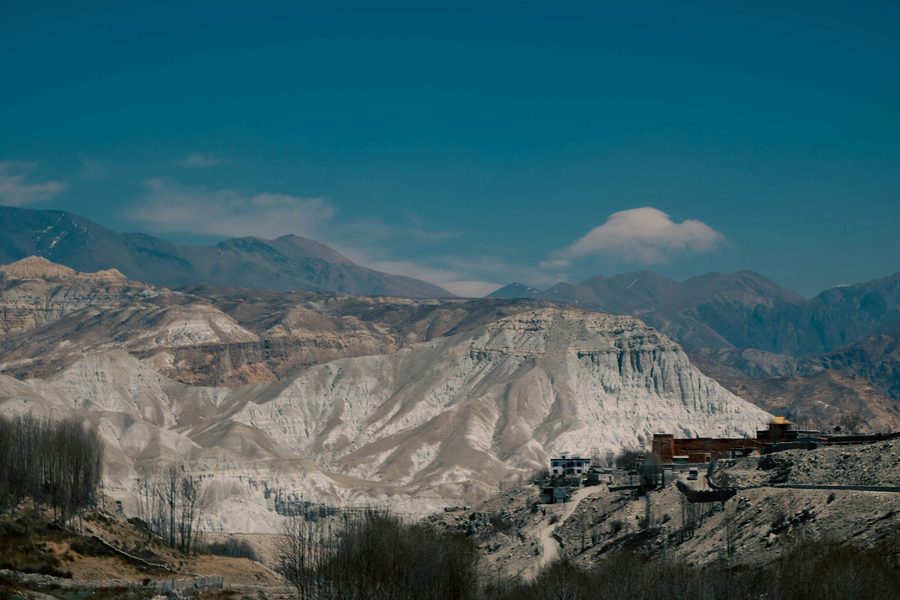
Altitude is the single most common concern for travellers considering a luxury train journey in China, and it should be. At 5,072 metres, the Tanggula Pass on the Qinghai-Tibet Railway is the highest railway point on Earth, higher than Everest Base Camp. But altitude is manageable when you understand how it works, how the trains are designed for it, and how to prepare. This guide explains everything.
At sea level, the oxygen saturation of your blood is 95-100 percent. At 3,600 metres (Lhasa), it drops to roughly 88-92 percent. At 5,000 metres, it can fall below 80 percent. Your body compensates by breathing faster, increasing heart rate, and producing more red blood cells, but this process takes days, not hours.
Mild altitude sickness (AMS) affects most people above 3,000 metres. Symptoms typically appear 6-24 hours after ascent: headache, nausea, fatigue, shortness of breath, and disturbed sleep. These symptoms are normal. They are not dangerous by themselves, but they are a warning to ascend no further until they resolve.
Key principle: The danger is not altitude itself. The danger is ascending too fast. Every metre you climb too quickly is a metre your body has not yet adapted to. Luxury train journeys are designed with this principle as the central safety constraint.
Oxygen provision, carriage systems, medical support and acclimatisation stops vary by train and departure. Confirm the arrangements for your selected itinerary rather than assuming that one Tibet product represents the whole fleet. A clinician or travel-medicine specialist should advise on personal suitability.
Many Silk Road routes stay lower than Tibet, but elevation still varies by itinerary and mountain crossing. Check the route profile and support arrangements before booking, especially if you have a medical condition affected by altitude.
Panda Express Chengdu (Sichuan): typically under 1,500m except Jiuzhaigou (3,100m), where hotel-based oxygen is available. Hulunbuir Express (Inner Mongolia): under 1,200m. No altitude concern. Anyi Express: varies by route; verify with your journey designer.
The most effective acclimatisation strategy is also the simplest: ascend gradually, sleep low, and do not rush. This is why our Tibet journeys include multiple nights at intermediate altitudes before reaching the high pass. It is not padding. It is the protocol.
| Day | Location | Altitude | What Your Body Is Doing |
|---|---|---|---|
| 1-2 | Xining | 2,275m | First exposure. Mild shortness of breath on stairs. Normal. Rest, hydrate, walk slowly. |
| 3 | Golmud | 2,780m | Brief stop. Body has started producing more red blood cells. The train's oxygen system is now active. |
| 3 (night) | Tanggula Pass | 5,072m | Oxygen-enriched carriage at ~2,500m equivalent. Sleep through the highest point. Do not get off. |
| 4-5 | Lhasa | 3,656m | Key adaptation period. Two nights to adjust. Light activities only: Barkhor circuit, tea, short walks. |
| 6+ | Beyond Lhasa | varies | Now acclimatised. You can handle excursions at higher elevations, including Everest Base Camp (5,200m) for those extending. |
Some conditions make high-altitude travel medically inadvisable. Consult your doctor before booking if you have any of the following:
Standard travel insurance may exclude altitude-related incidents. Before travelling to Tibet or any route above 3,500 metres, confirm with your insurer that altitude sickness, helicopter evacuation and medical repatriation from remote locations are covered. If your policy excludes these, we can recommend specialist insurers. Travel without adequate altitude cover is not permitted on our Tibet journeys.
Discuss Your Health Concerns →
Editorial standards: This guide is researched from official operator documentation and medical guidelines for high-altitude travel. It was last verified July 2026. If you find an inaccuracy, tell us and we will correct it within 48 hours. This page is informational and does not replace advice from your doctor or travel clinic.