
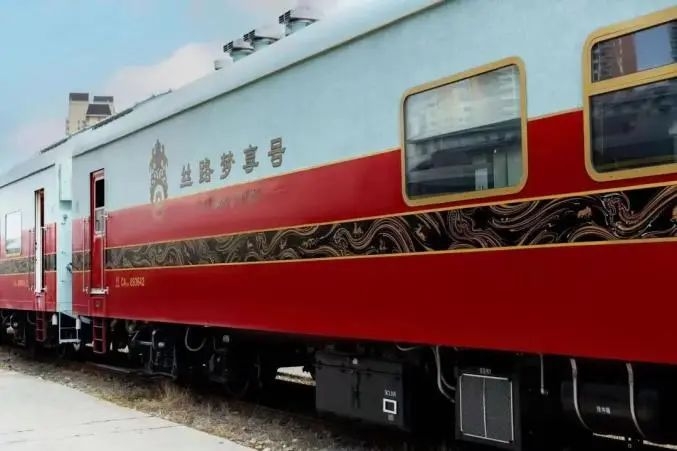
Our fleet ranking puts three trains in the flagship tier, and they could hardly be more different animals. The Silk Road Express (丝路梦享号) is run by a commercial luxury brand and carries just 80 guests. Jinxiu Tianfu (锦绣天府号) is a state culture project that treats the train as a scroll of Song-dynasty aesthetics. The White Cloud Express (白云号) is a bibliophilic newcomer from Guangzhou with the longest single itinerary in the country. All three are 2024–26 builds, all sell all-inclusive Xinjiang and Silk Road programmes to exactly the same traveller — and none of them can be booked on 12306. This page takes them apart.
Verdict first
If exclusivity is the metric, the Silk Road Express wins and it is not close: 38 cabins for 80 guests and a 1:2.2 staff-to-guest ratio that the other two do not approach. If cultural immersion is the metric, Jinxiu Tianfu is the most complete — it is the only train whose design language extends into every meal, performance and craft session. If you are boarding from southern China, travelling with elderly parents, or want the single longest itinerary, the White Cloud Express is the natural pick. Full reasoning below.
The spec sheet
| Silk Road Express | Jinxiu Tianfu | White Cloud | |
|---|---|---|---|
| Launched | 2024 | May 2026 | Aug 2026 |
| Cars / cabins / guests | 15 / 38 / 80 | 18 / 46 / 92 | 18 / 46 / 92 |
| Staff ratio | 1:2.2 | 1:0.5 | 1:0.5 |
| Top suite | 22 m2 Jinxiu Weiyoung (2 only) | 13 m2 JinTa (6 cabins) | 13.8 m2 Yunqi Lanyue (6 berths) |
| En-suite bathrooms | All 38 | All 46 | All 46 |
| Dining | Two restaurant cars (Chinese + Western) | JinShi dining car, seven themed banquet menus | Yunyan Qinghuan, Michelin-trained fusion |
| Operator | Star Express Travel (Fosun-linked) | Sichuan Tourism Investment + Chengdu bureau | Guangzhou Southern Trains Intl Travel |
| Boards at | Xining (some Xi’an departures) | Chengdu (+ Lanzhou) | Guangzhou |
| Reference fare | RMB 69,999–89,999 (16d) | RMB 78,880–98,880 (16d) | RMB 98,880+ (18d Xinjiang); from 49,880 (Yunnan) |
Fares are channel-published reference rates for twin occupancy; confirm current rates for your date and cabin before paying a deposit. The Silk Road Express’s suite fares are quoted per suite.
Silk Road Express: the exclusivity play
The oldest of the three (2024) and still the most private train in China: 15 cars, 38 en-suite cabins, 80 guests at full load. It is also the only flagship operated by a commercial luxury travel brand — Star Express Travel (星享铁旅), backed by Fosun infrastructure interests — rather than a railway bureau and a state tourism group. That shows in the product logic: routes are shorter and more modular (4 to 17 days), service is hotel-grade, and the whole train is built around low-density public space.
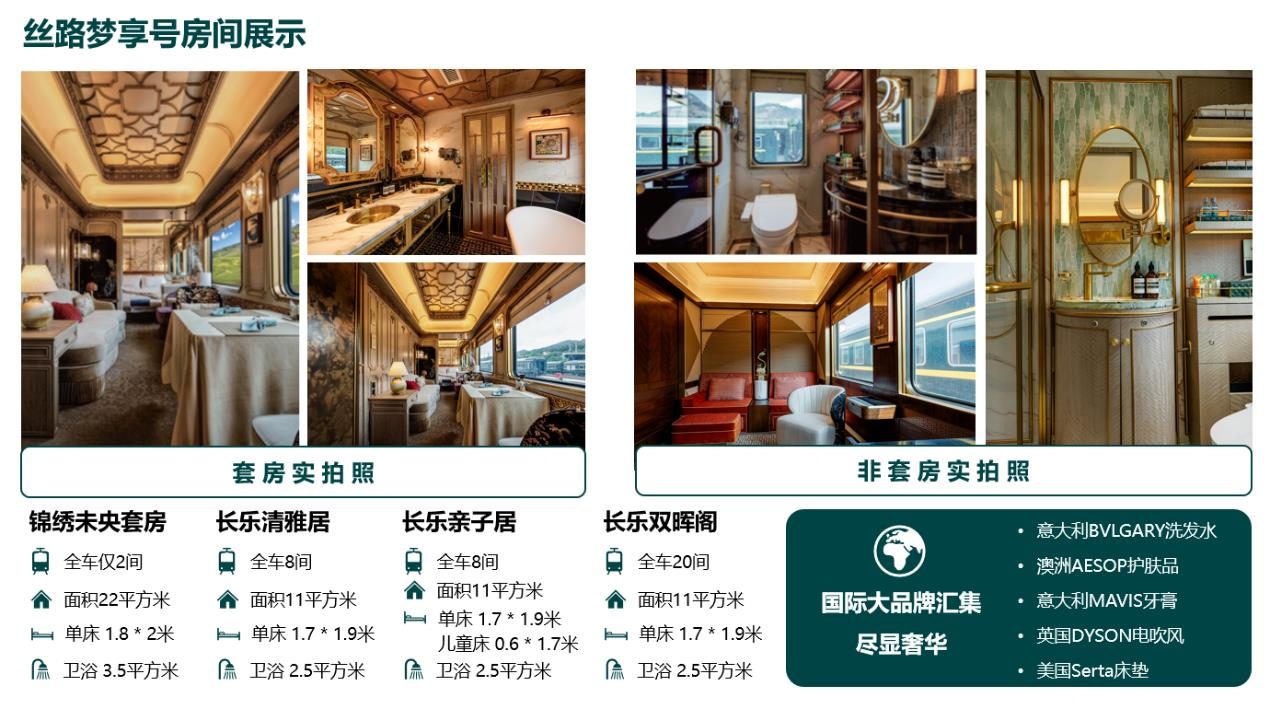
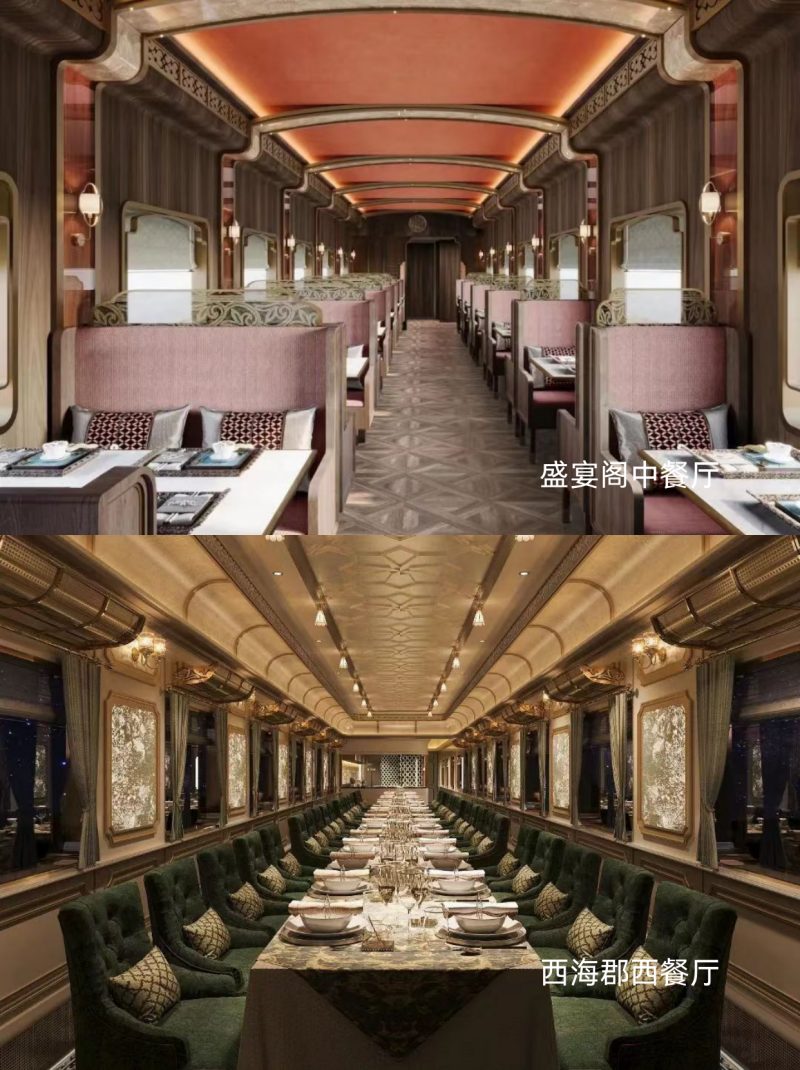
The staffing is the headline. At 1:2.2 — more than two crew per guest — it quadruples the density of the other two flagships. Dining runs across two restaurant cars (Chinese and Western) sized for all 80 guests at once, and the public kit includes a 270-degree panoramic multi-function car, a lounge, KTV and a mahjong room. The two Jinxiu Weiyoung suites (22 m2, panoramic soaking tub, 3.5 m2 bathroom) are per-suite fares, not per-person.
Routes centre on Qinghai and Gansu: a 7-day Xi’an–Xining–Golmud–Dunhuang grand tour, a 5-day Xining–Dunhuang sprint, a 7-day autumn Populus season to Kashgar, and the 17-day south-and-north Xinjiang deep dive from Xining. 2027’s published season concentrates between late April and late September, plus a winter carnival product across the New Year.
Jinxiu Tianfu: the culture machine
The newest member of the Panda Express family and its top tier. Everything on board is organised into five themed domains — JinTa (suites), JinWo (cabins), JinYa (reception), JinShi (dining), JinJi (entertainment and scenery) — and the Shu-brocade-meets-Song-aesthetic language runs from the upholstery to the seven themed banquet menus. Where the Silk Road Express sells hotel-style privacy, Jinxiu Tianfu sells an unbroken cultural performance: guzheng sessions, bamboo-weaving crafts, Song-style tea ceremonies.
The operation is a joint project of China Railway Chengdu bureau and Sichuan Tourism Investment Group, with Golden Key concierge standards and a 1:0.5 staff ratio. It is the inbound success story of the three — around 90% of guests on early departures were international travellers — and the 16-day Chengdu–Xinjiang programme (RMB 78,880 in JinWo, 98,880 in JinTa) runs with alternate boarding in Lanzhou, which halves the domestic flight for travellers coming from Europe via a western gateway.
White Cloud: the bibliophile from the south
The youngest flagship (August 2026) and the only one boarding in the south: Guangzhou Baiyun station, a hub with direct HSR, intercity and metro connections — uniquely convenient for guests arriving via Hong Kong. Its identity is a scholar’s mansion on wheels: cars named in a “cloud” (云) sequence, a four-door ceremonial reception hall, a dougong-bracket dining car set with Liling gilt porcelain, and a scenic car recreating the Aiwan Pavilion of Yuelu Mountain. Lingnan window lattice and Cantonese arcade motifs carry the Guangzhou DNA; Hunan embroidery carries the route’s.
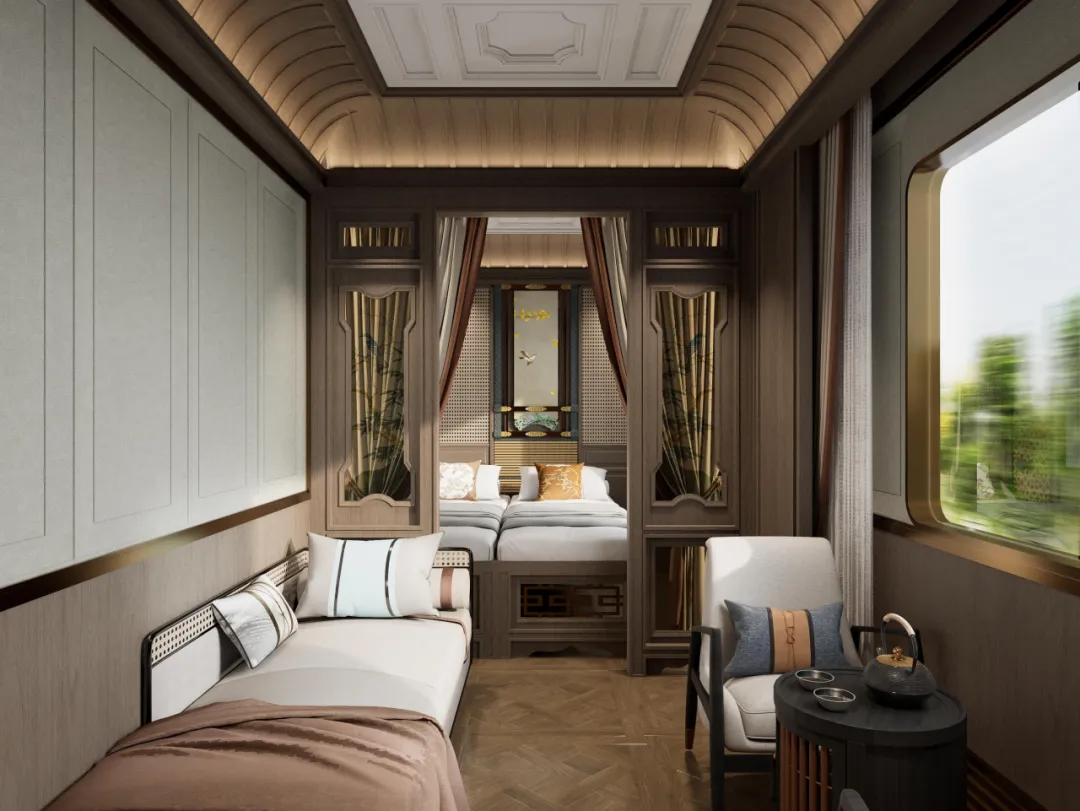
Two hardware notes set it apart. It rides on 25K-type stock with SW-160 bogies and air springs — the smoothest-riding of the three at up to 140 km/h — and it carries the most developed provision for older and international guests: step-free flooring, in-cabin emergency calls, a travelling medical team, bilingual butlers, Visa/Mastercard payment, border-permit assistance for Xinjiang, and dietary accommodations from halal to gluten-free. The 18-day North-South Xinjiang panorama (from RMB 98,880) is the longest single itinerary in Chinese luxury rail; a shorter Yunnan loop starts at RMB 49,880, the cheapest way into any flagship.
Three service philosophies
The staffing numbers translate into genuinely different days on board. On the Silk Road Express, 1:2.2 means the service finds you: cabins are refreshed constantly, meals run without sittings, and the crew-to-task match is closer to a five-star hotel than a train. On Jinxiu Tianfu, 1:0.5 plus Golden Key protocols orbit around choreography — the day is a sequence of staged cultural moments with hosts, docents and craftsmen. On the White Cloud, the same ratio is pointed at care: butlers trained for elderly travellers, medical cover on board, and the multilingual layer that makes it the easiest flagship for non-Chinese speakers to actually book and ride.
Routes, boarding cities and flights
- Silk Road Express — Xining / Xi’an. The only flagship rooted in Qinghai–Gansu rather than a single long loop. Best for travellers who want the classic Hexi Corridor without committing 16+ days, with a 17-day Xinjiang option when they do.
- Jinxiu Tianfu — Chengdu (+ Lanzhou). The panda-city gateway adds a tourism destination of its own before boarding. Lanzhou alternate boarding is a quiet logistical win for Europe-bound itineraries.
- White Cloud — Guangzhou. Zero extra domestic flight if you enter via Hong Kong or Southeast Asia; the 18-day panorama is the country’s longest, and the Yunnan loop is a first taste at flagship level from RMB 49,880.
Price bands, honestly compared
On 16-day Xinjiang programmes the three land surprisingly close: Silk Road Express RMB 69,999–89,999 per person, Jinxiu Tianfu RMB 78,880–98,880, White Cloud RMB 98,880+ for the 18-day version. The differences live at the edges: the Silk Road’s two Jinxiu Weiyoung suites are per-suite fares (RMB 179,999–408,100) for travellers who want the top of the entire market; the White Cloud’s Yunnan loop undercuts everything at RMB 49,880 in the four-berth tier. Per-day value flips depending on cabin — run the numbers in our price table before assuming the headline fare is the real one.
How to choose
Exclusivity is the point: the fewest fellow guests, the most crew per head, the only 22 m2 suites in the country, and modular 4–7 day options that respect a two-week holiday budget.
You want culture as the main event — the most complete themed-programme train in China — plus Chengdu as a gateway city and the proven 90%-international departure mix.
You board from the south, travel with elderly parents, need English-friendly booking end to end, or simply want the longest — or cheapest-entry — flagship itinerary available.
A final note on booking: none of the three sells through 12306 — see our booking guide for the authorised channels, deposit levels and the contract checks that matter. And if your decision is really about budget tier rather than flagships, start with the Premium Three instead.
Sources: operator and authorised-channel releases for each train (2026), Star Express Travel’s published product pages, and regional government releases on the White Cloud’s August 2026 launch. Silk Road Express fares are channel-published for 2026 departures and require confirmation for 2027; suite fares are per suite. Staff ratios are operator statements. Confirm current rates, dates and cabin inventory before paying any deposit.