
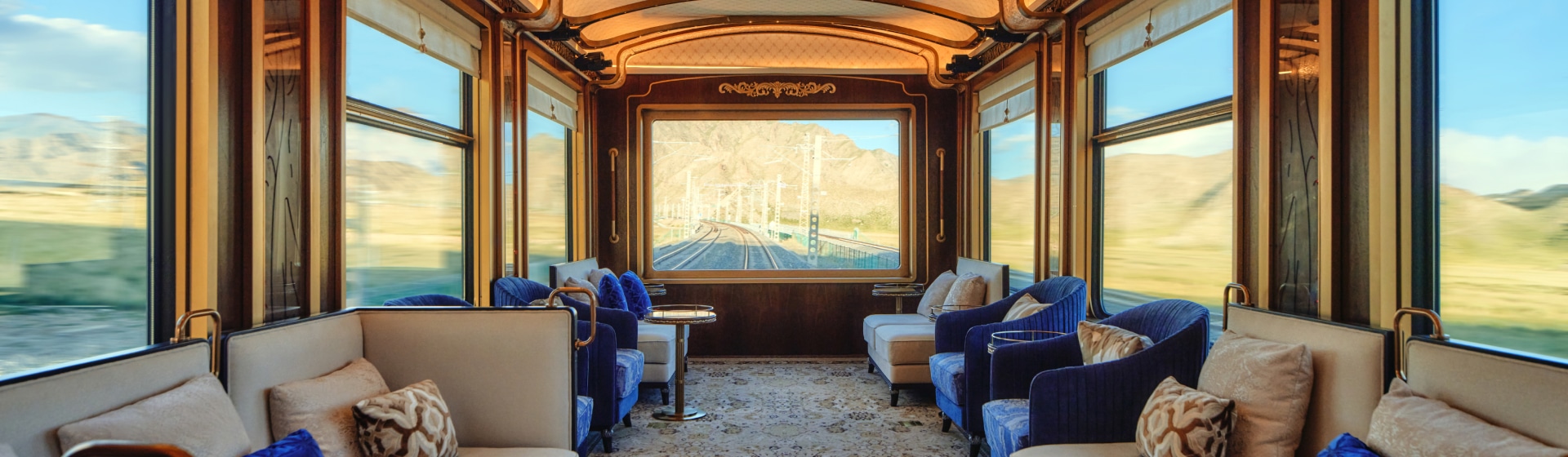
If you have cruised before, a China luxury train will feel familiar: a private cabin, included meals, excursions and a set itinerary. The real difference is geography. A cruise follows the coast; a train threads straight through the interior, reaching the Silk Road, Xinjiang and the grasslands that no ship can.
Side by side
| Luxury train | Luxury cruise | |
|---|---|---|
| Reach | Inland: deserts, mountains, Silk Road towns | Coastlines and port cities only |
| En-suite bathroom | Yes, every cabin | Yes, every cabin |
| Meals | All included, themed banquets | Included, more buffet-style |
| Shore excursions | All included, guided | Often an add-on |
| Time ashore | Full days, you wake at the destination | Hours per port, sail in the evening |
| Per-night cost | About $1,000 all-inclusive | $600 to $1,500 plus excursions |
Three differences that matter
Where you can go
A ship stops at the coast. A train crosses the interior overnight, so you wake up in Dunhuang, Kashgar or the Hulunbuir grasslands, places no cruise can reach.
A day ashore
On a cruise you get a few hours in port before sailing. On a train, the itinerary is built around full days off the train, with guided excursions already included.
What is included
Both are all-inclusive, but shore excursions on a cruise are frequently an extra, while on a China luxury train every guided excursion and entrance ticket is bundled into the fare.
Which should you choose?
Choose a train if you...
- Want the Silk Road, Xinjiang or the grasslands
- Prefer full days exploring over hours in port
- Want excursions included with no add-ons
- Like a smaller, more intimate passenger count
Choose a cruise if you...
- Want a multi-country coastal route
- Prefer sea days and onboard entertainment
- Enjoy a larger ship with more facilities
- Are happy to book shore trips separately