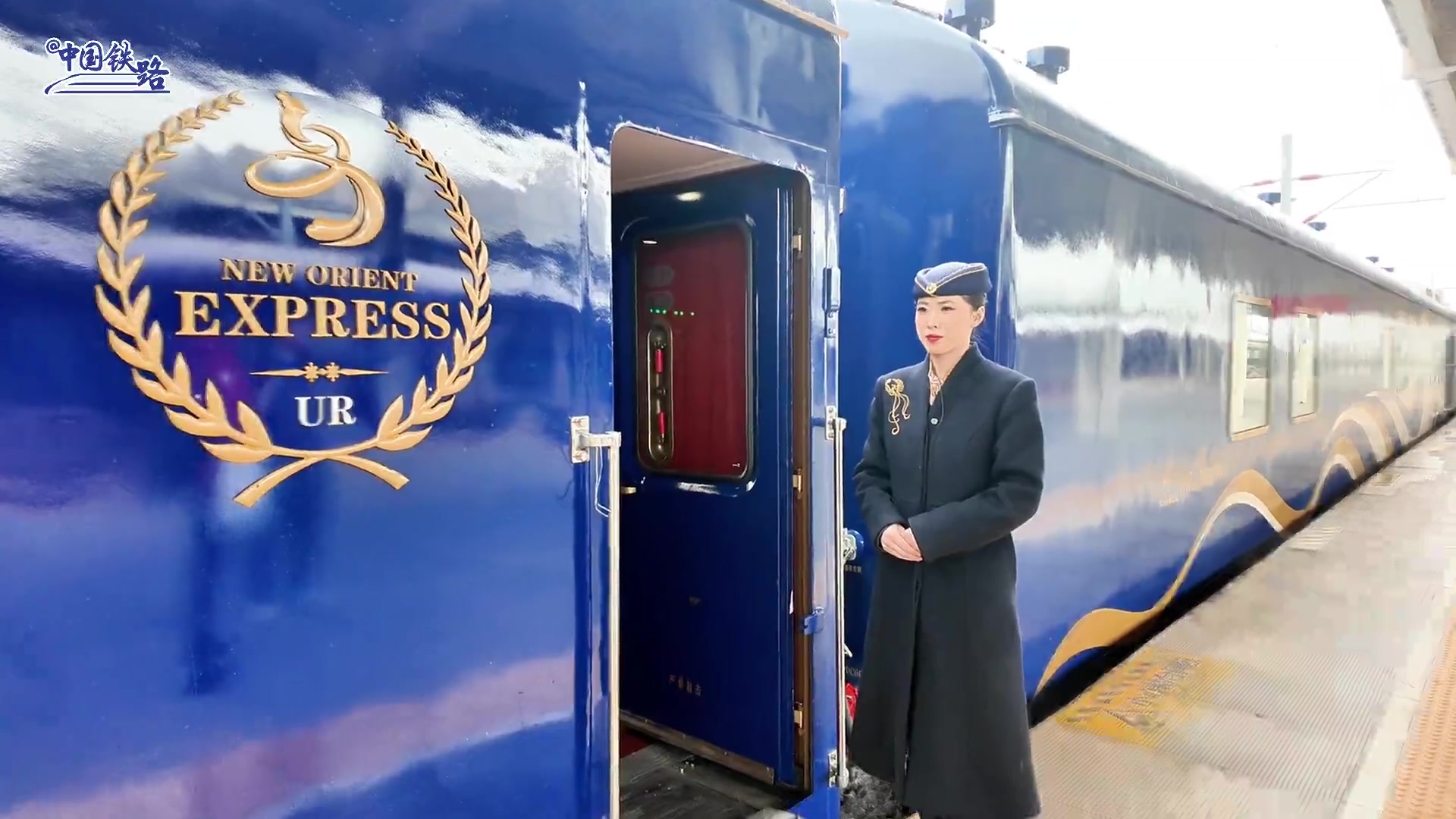
Search for the Orient Express and, somewhere below the famous European sleeper, a Chinese train keeps appearing: the New Orient Express, a luxury touring train that crosses Xinjiang in up to fourteen days. Is it a branch of the European brand? A copy? A licensed revival? The answer is simpler and more interesting: it is an independent Chinese product whose English name happens to echo one of the most famous names in rail travel.
The name is a translation
In Chinese the train is called 新东方快车, and “New Orient Express” is its straightforward English rendering. The “Orient” part carries the same geographic sense as in the historical European service: the direction of sunrise, the lands east of Europe. From a Chinese railway company's perspective, a train heading into China's own far west is travelling toward the Orient's interior, which is exactly where the route goes: Urumqi, the Tianshan, Kashgar, the Pamirs.
The “New” part is equally literal. The train launched in 1999 as a step beyond the standard long-distance sleeping cars of the era, and every fleet upgrade since has kept the word honest: the name has now outlived three generations of carriages. The operator has never published a formal statement on naming, so this reading stays at the level of what the words plainly say, rather than marketing lore.
Not the European Orient Express
The famous Orient Express of posters and films is a European brand, today associated with the Venice Simplon-Orient-Express and a family of hotel-branded sleeper services. The New Orient Express is not part of that family. It is a product of China Railway Urumqi Group, the railway bureau that runs Xinjiang, and it is booked through Chinese railway tourism channels rather than any European operator. There is no licensing, franchise or corporate connection between the two names.
The overlap is one of geography and vocabulary, not corporate history. Both brands borrowed the same old word for “east”; one kept it attached to a continental route between Paris and Istanbul, the other attached it to a desert-and-mountain route across the largest province of China. If anything, the Chinese train is closer in spirit to the original concept: a long-distance sleeping-car journey through remote and varied territory, run by a national railway, rather than a short luxury hop.
An English name with an old reason
There is a practical reason the train carries an English name at all. When it launched in 1999, its main clientele was international visitors, and the English name was how those travellers found and booked it. Only after 2020 did the domestic market become its core audience, as China's own demand for high-end rail touring grew. The name is therefore a relic of the train's original export orientation, which is why an English-speaking traveller today feels addressed by it, and why booking materials for international guests have never stopped using it.
One name, three generations
Part of the confusion around the name is that it covers more than one train. The 1999 generation ran with the Gold Diamond and Silver Diamond cabin system, and its carriages were still being redeployed years later, including on winter ski trains to Altay. A major upgrade entered service in April 2026 with an eighteen-car formation, and for 2027 the third generation runs alongside the second: the Snow Lotus flagship (雪莲紫金号) with twelve north-south sailings, its sister group Snow Lotus Platinum (雪莲铂金号) with ten, and the second-generation Xingyi formation still selling from RMB 16,800. Under one name, fares now run from RMB 16,800 to RMB 72,999, which this comparison of the generations untangles.
So when a departure notice, a review or a price refers to the New Orient Express, the first question is always which generation and which fleet name it means. The cabins and dining cars described on this site are the third-generation Snow Lotus formation, the one most 2027 departures use.
What the name means for booking
Because the name is not a European brand, it is not booked the way European sleeper trains are. There is no seat-only ticket on China's 12306 system: the New Orient Express sells as a packaged tour including cabins, meals, guiding and transfers, through the operator's hotline (400-012-3545) and licensed channels. Our booking guide walks through the steps, and every fare on this site is checked against the operator's published releases.
More on the New Orient Express: every sight along the route, the four fare bands by budget, how it differs from the Tianshan Express, and a day-by-day walk through the fourteen-day journey.