
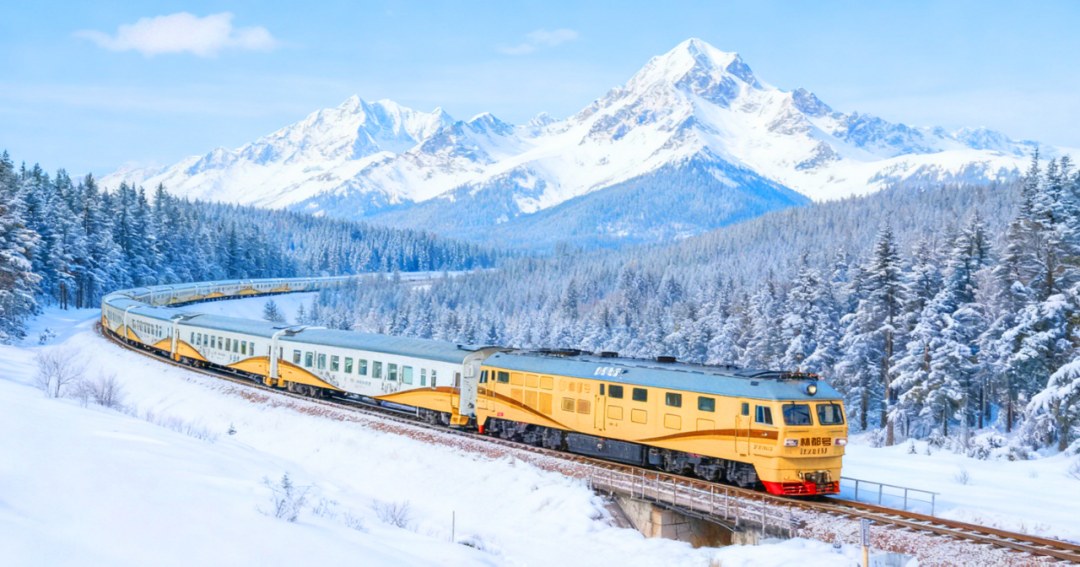
Xinjiang owns China’s luxury rail summer. Winter belongs to the north-east — and it is no longer the poor relation. Three trains now contest the frozen season: the Lindou Express, a fifteen-car boutique hotel that carries just 60 guests through the forests of Lesser Khingan; the Hulunbuir Express, 44 guests in 22 en-suite cabins, returning to service this winter; and the Snowland (悠享龙江·雪国号), a purpose-built senior-friendly train from Harbin Railway. They could not be more different products, and the fare spread — RMB 6,280 to RMB 59,999 — says so.
This is a guide to choosing between them: what each train is, what the winter actually looks like at −30 °C, and when to book before the cabins go.
The three at a glance
| Lindou Express | Hulunbuir Express | Snowland 雪国号 | |
|---|---|---|---|
| Guests | 60 | 44 | Larger (soft-berth) |
| Composition | 15 cars, 7 function cars | 11 cars, 5 function cars | Senior-oriented |
| En-suite bathrooms | Yes, all cabins | Yes, all 22 cabins | Shared |
| Journey | 9 days | 6 days 5 nights | Multi-day loop |
| From (RMB / person) | 29,999 | 21,999 | 6,280 |
| 2026/27 dates | 15 Dec – 7 Feb, 8 sailings | Resuming H2 2026 | 24 Nov – 6 Feb, 9 sailings |
Fares are channel-published reference rates per person, twin share. Hulunbuir dates are provisional pending the operator’s own re-release — see the status note in its section below.
Lindou Express — the boutique hotel that moves
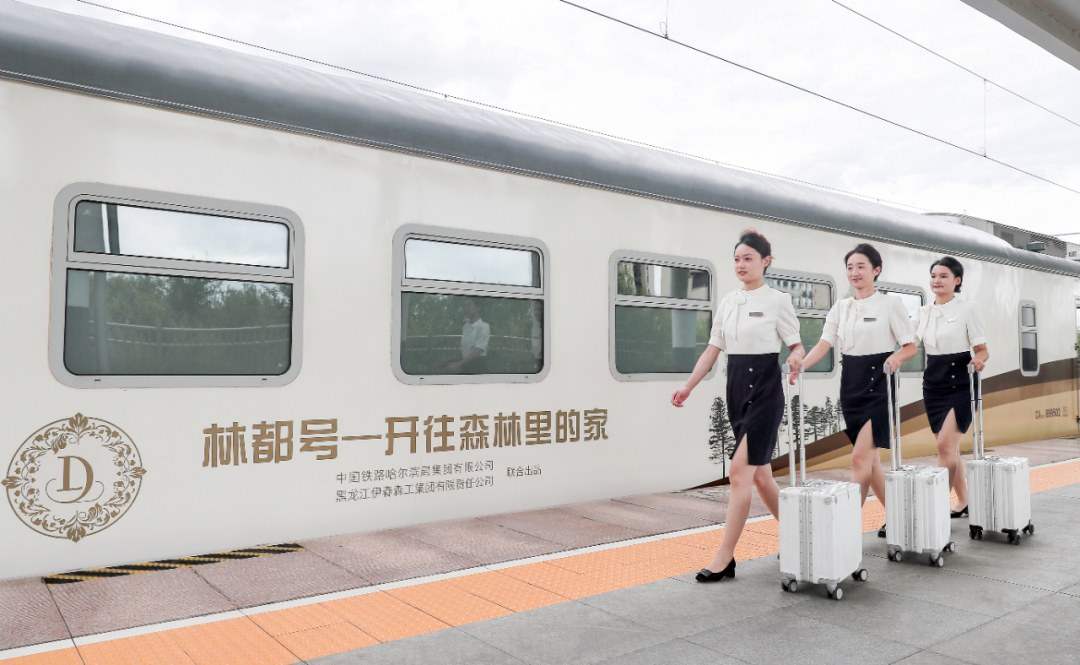
Built jointly by the Yichun Forest Industry Group and China Railway Harbin, the Lindou has been running summer forest programmes since June 2023, and its winter product — launched last season — is now the most fully specified ice-and-snow rail journey in China. The numbers make the case: fifteen cars, seven of them function cars, and a full load of just 60 guests. It is routinely described in Chinese media as a “five-star hotel on rails”, and the function-car list explains why: a jazz bar with live musicians, a Chinese tea room, a western and a Chinese restaurant, a conference car, a children’s playroom, a library, a product showroom and a medical car with a physician in residence — a doctor of traditional Chinese medicine rides along and consults free of charge.
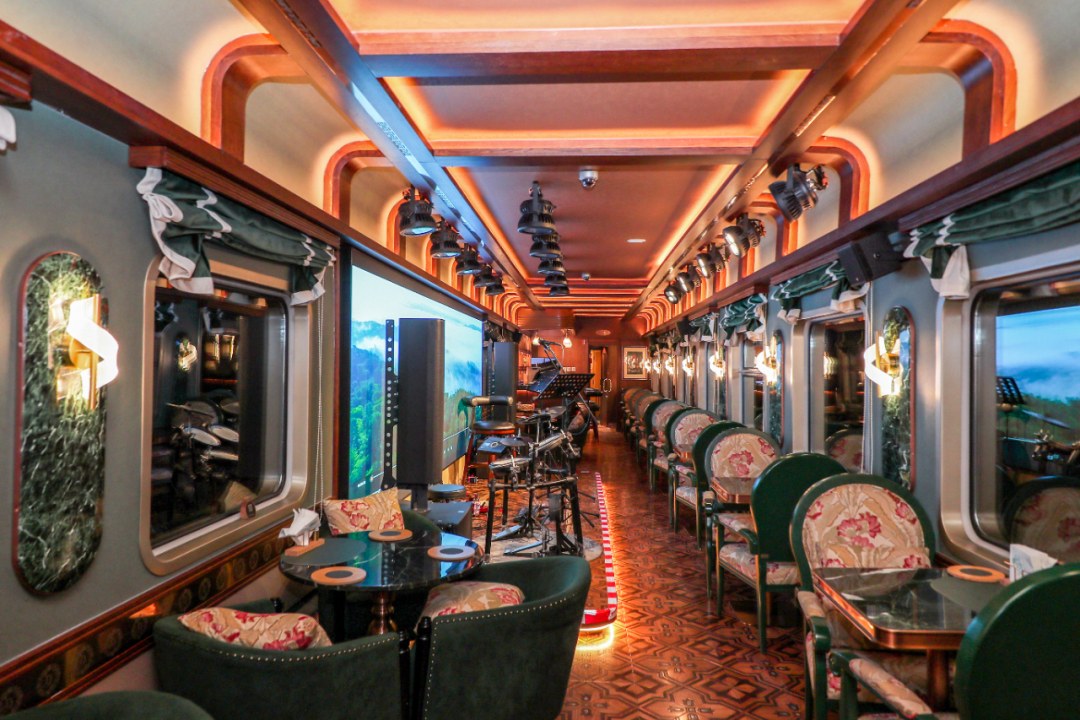
The nine-day itinerary strings together Harbin, Yichun’s red-pine forests, the snow town of Xuexiang and (on some sailings) Mohe and North Pole Village on the Amur border, with three nights on the train and five in hotels. Dining is specified to the yuan: eight breakfasts and fifteen meals, with lunches at RMB 100, dinners at RMB 150 and a festive banquet at RMB 200 per head. The exterior livery — red pine, mountain and snowflake motifs — was designed for exactly this landscape.
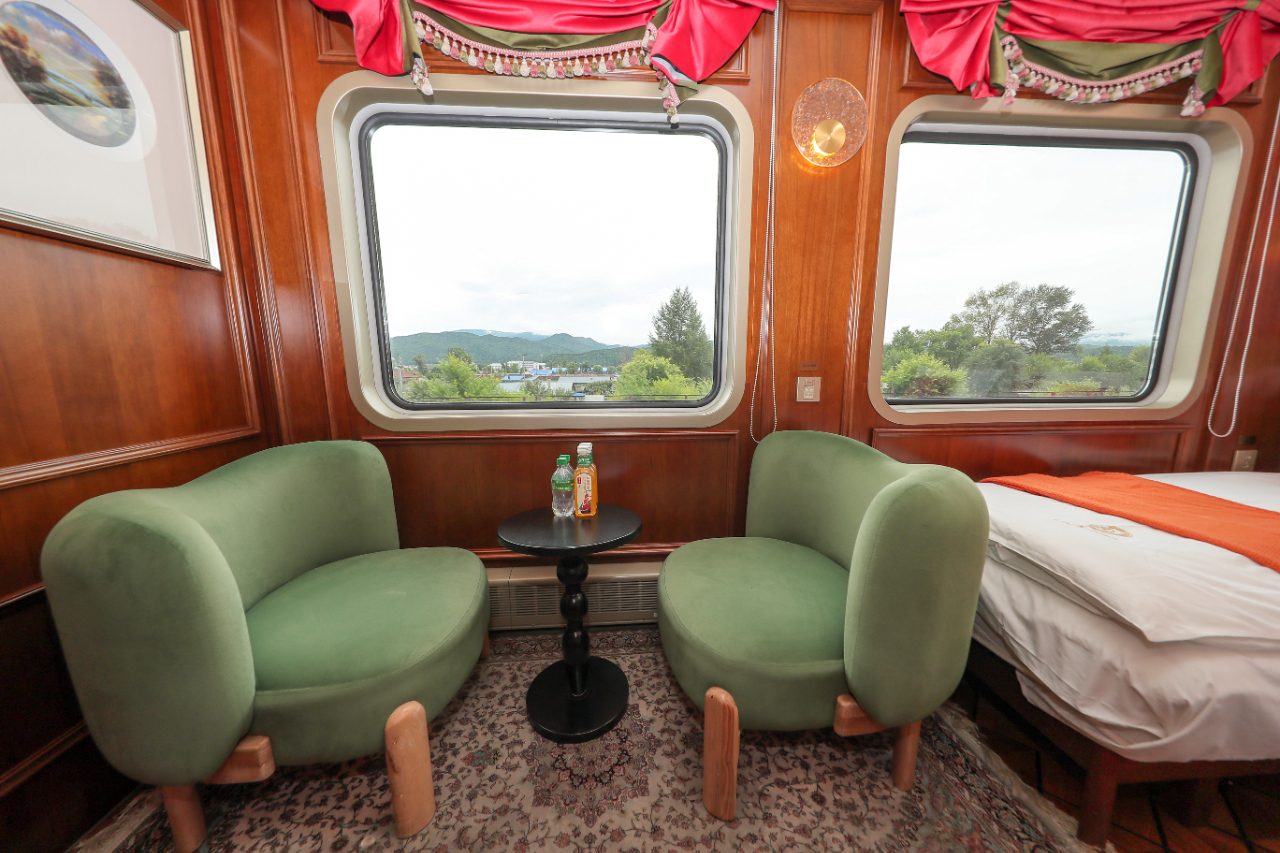
2026/27 sailings: 15 December, 23 December, 30 December, 6 January, 13 January, 21 January, 29 January and 7 February. Fares run three tiers on the Gold Diamond standard — RMB 29,999, 31,999 and 36,999 depending on the sailing — with the Supreme Suite at RMB 49,999, rising to 59,999 on holiday dates. Book via the operator hotline or an authorised agent; it does not appear on 12306.
Hulunbuir Express — the smallest, coming back
The Hulunbuir Express needs no introduction to regular readers — we covered its booking route and full specification last month. The winter edition is the one to watch: eleven cars, 22 en-suite cabins, 44 guests, built to a high-cold specification with interiors held at 22–26 °C. The winter route runs Hailar – Genhe – Zhalantun – Harbin (or in reverse), with a Chinese New Year limited edition reaching Mohe and North Pole Village. Reindeer-feeding at China’s “cold pole”, birch-bark craft with a national-level inheritor, and a private concert in Harbin’s Volga Manor are the anchors.
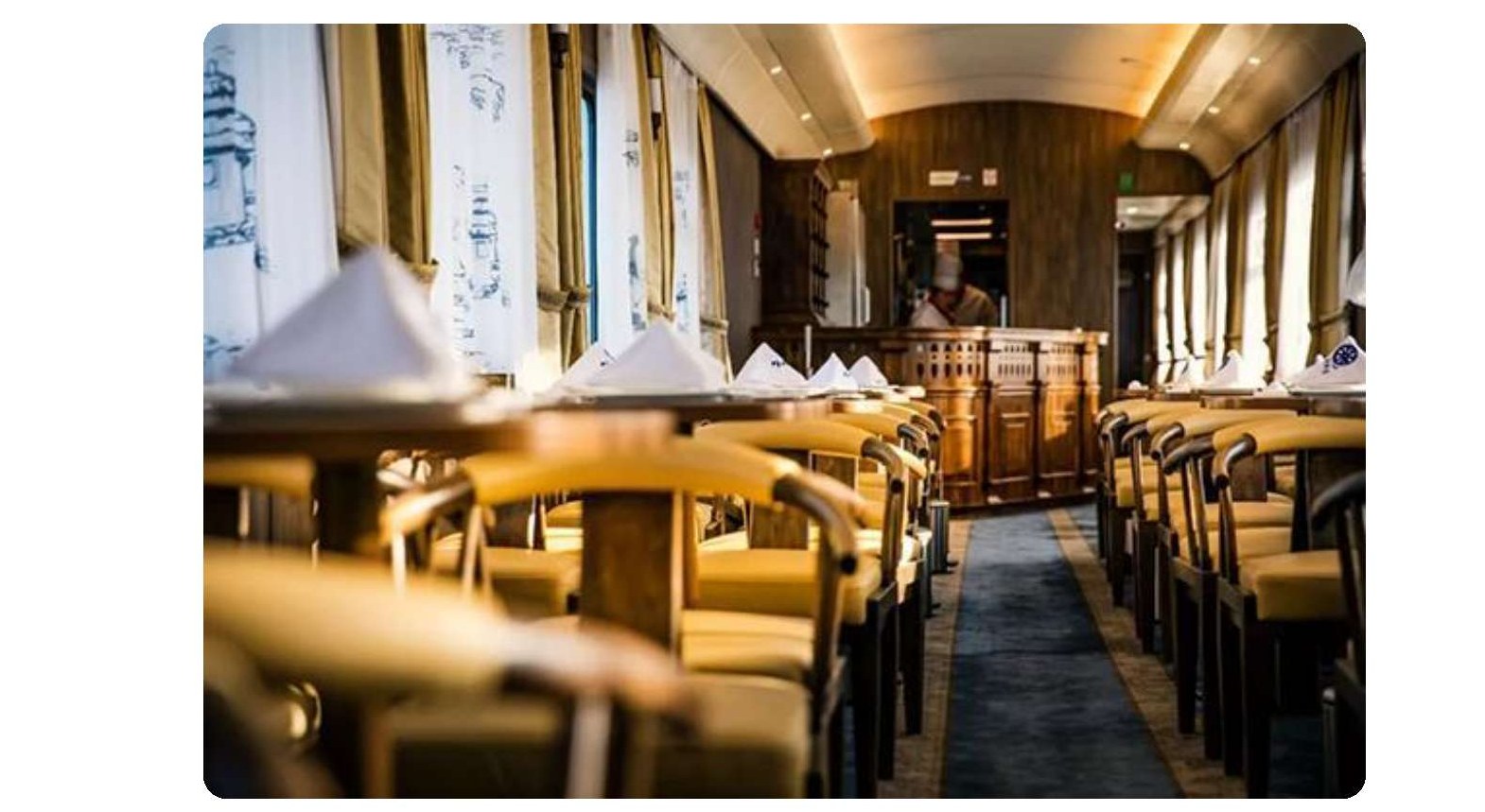
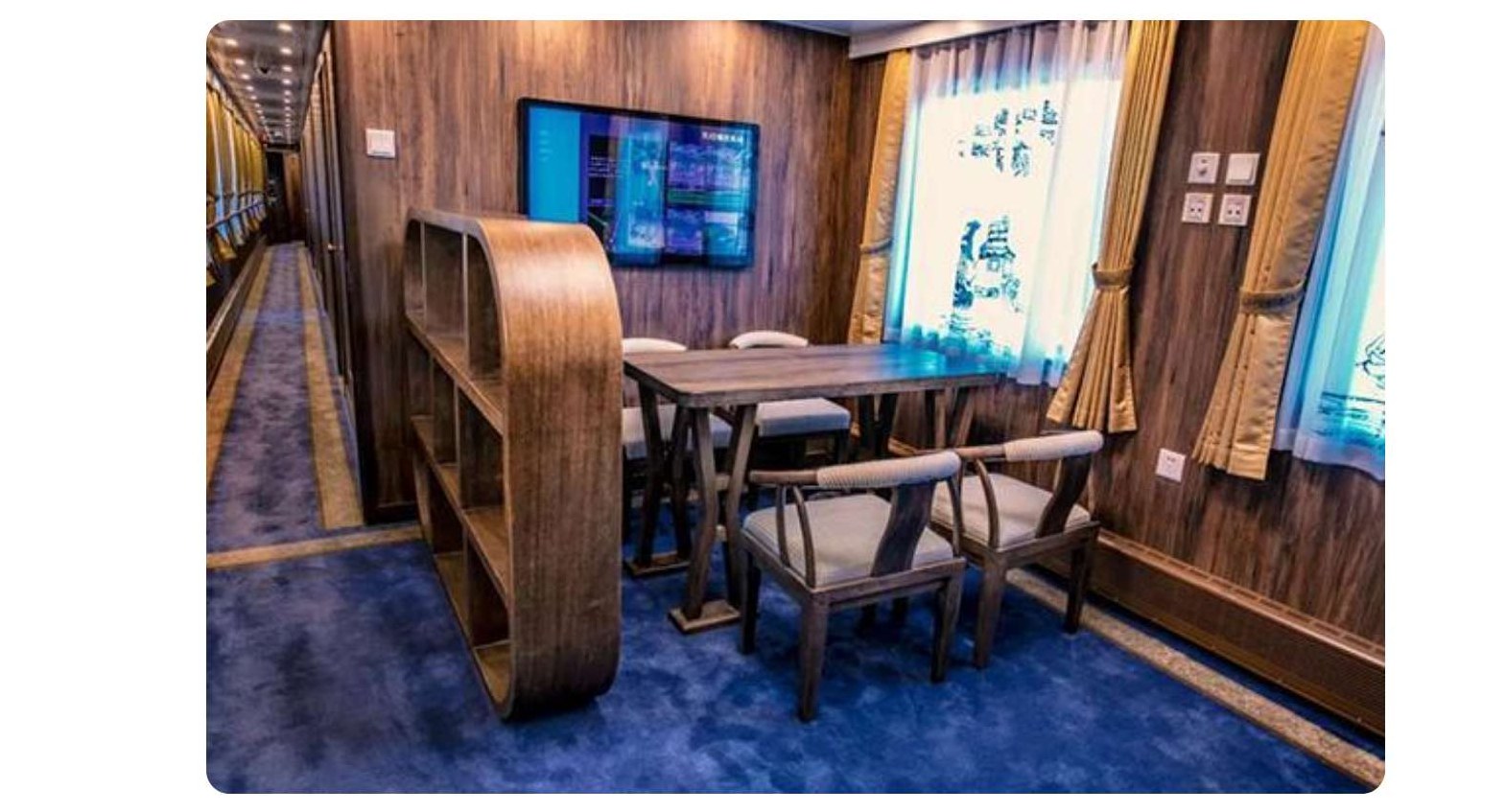
Status: the operator has withdrawn its product page while Hulunbuir’s transport authority confirms the train resumes operations in the second half of 2026, with a wider grassland and border routing promised. Channel summaries have listed winter fares from RMB 21,999 (Classic Gold) to 29,999 (Supreme Purple Gold), and it remains the only train in this class bookable through the 12306 app’s Railway Tourism section. Treat published dates as provisional until the operator re-releases — and do not read an empty calendar as a cancellation. See our full Hulunbuir briefing for the specification.
Snowland — the accessible entry
The third contender is a different species. The Youxiang Longjiang · Snowland (悠享龙江·雪国号) is China Railway Harbin’s senior-oriented comfort train — its livery traces a dragon in gemstone blue and champagne gold, and the interiors follow a “one car, one theme” plan. Nine sailings run from 24 November through 6 February, and fares start at RMB 6,280 for an upper soft berth and 6,680 for a lower — roughly a fifth of the Lindou’s entry price.
The trade-offs are what you would expect at a fifth of the price: soft-berth rather than private-cabin accommodation, shared facilities, larger guest loads and Chinese-language service throughout. But as a first taste of winter rail travel — or for a mixed-age family group watching its budget — it is a serious option, and the only one of the three designed from the ground up for older travellers.
The destinations, briefly
All three trains converge on the same frozen corridor, and the stops are the reason to go in winter rather than summer. Harbin — the Ice and Snow Festival, Russia’s onion domes on the Songhua riverfront, Volga Manor. Genhe — China’s official “cold pole”, home to the last reindeer-herding Evenki community. Mohe — Beiji (North Pole) Village and the northernmost post office in the country, inside the Aurora Zone’s southern edge. Xuexiang — the “snow town” whose timber houses grow meter-deep snow mushrooms. Yichun — the red-pine forests of the Lesser Khingan range. Winter light is short — plan on roughly seven usable hours — but the compensations are frozen rivers you can walk on and skies that photograph blue-black by three in the afternoon.
How to choose
- By budget: Snowland from RMB 6,280; Hulunbuir from 21,999; Lindou from 29,999. Each step up buys a smaller guest load, en-suite cabins and a higher dining standard.
- By journey length: six days on the Hulunbuir, nine on the Lindou; the Snowland loop is the most flexible. More days means more off-train stops — the Lindou’s nine days cover five distinct bases.
- By privacy: 60 and 44 guests are genuinely intimate loads with en-suite cabins throughout; if a private bathroom matters, those two are the shortlist.
- By timing: the 30 December and holiday-adjacent sailings carry the highest fares and sell first. Early January is the value window — same snow, lower tier.
- By booking ease: the Hulunbuir is bookable on 12306’s Railway Tourism section; the Lindou and Snowland go through operator hotlines and authorised agents. Our booking guide covers the process.
One planning note that catches everyone: winter daylight in this region runs short, so the trains travel at night and sightsee in the compressed middle of the day. Pack for −30 °C even if forecasts look milder — Genhe has recorded below −50 °C — and treat the onboard heating as the luxury it is.
See the Lindou Express →Check Winter Availability
Sources: operator and authorised-channel winter releases (August 2026) for Lindou dates, fares and dining standards; China Tourism News (25 June 2026) on the Hulunbuir specification; Hulunbuir transport authority on the 2026 resumption; channel summaries for Snowland dates and fares. All fares are channel-published reference rates — confirm for your date before paying a deposit.